Prof. Dr. Jörg R. Hörandel
Prof. Dr. Jörg R. Hörandel
Research Interests
Understanding the origin of cosmic rays and their role in the Universe. Developing detectors for astroparticle physics and radiation therapy.
Pierre Auger Observatory
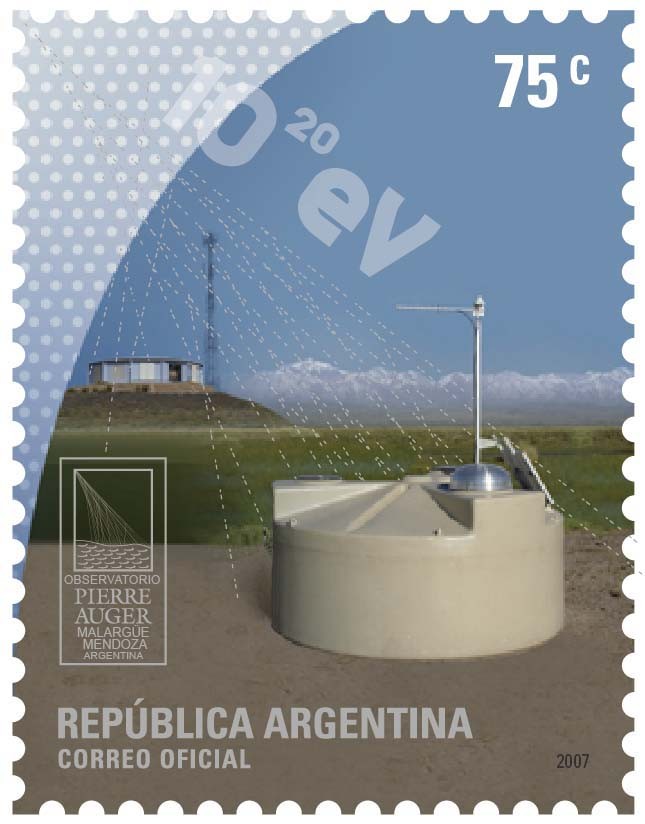
Indirect measurement of cosmic rays with the Pierre Auger Observatory
Cosmic rays with energies exceeding 1020 eV are the highest-energy particles in the Universe. The physics and origin of these particles is explored with the Pierre Auger Observatory, the world largest air shower experiment.
Since 2014 Hörandel is taskleader for radio detection at the Pierre Auger obseravtory. The Auger Engineering Radio Array AERA is a 17 km2 array to detect the radio emission from air showers in the energy range from 1017 to 1018eV.
In 2018 Hörandel received an Advanced Grant from the European Research Council (ERC) and together with his colleague Sijbrand de Jong a subsidy from NWO to establish the Auger Radio Detector RD. The RD is a completely new detector component for the observatory, installed as part of the AugerPrime upgrade and is covering the full 3000 km2 of the Surface Detector array. The RD extends the physics capabilities of the Auger observatory and will contribute to solve the mysteries about the physics and origin of the highest-energy particles in the Universe.
LOFAR Key Science Project Cosmic Rays
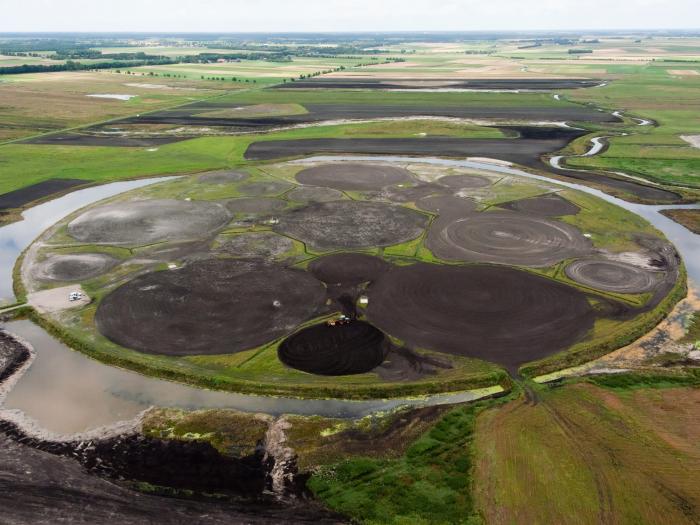
Measurement of radio emission from high-energy particles with the LOFAR telescope.
The LOw Frequency ARray is a large radio observatory in the Netherlands and Europe. The key science project "Cosmic Rays" focuses on the detectrion of radio emission induced by high-energy cosmic rays impinging the Earth's atmosphere or by high-energy particles hitting the surface of the Moon. Hörandel was PI of the LOFAR key science project Cosmic Rays from 2007 to 2020. He established the LOFAR Radboud air shower array LORA in the LOFAR core.
Global Cosmic Ray Observatory - GCOS
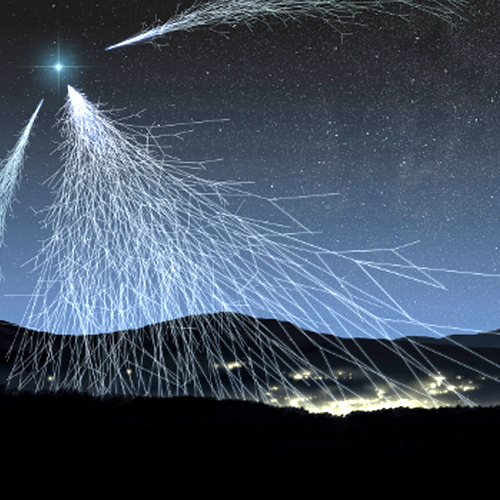
The Global Cosmic Ray Observatory - GCOS is a next-generation observatory to measure the properties of the highest-energy particles in the Universe with unprecedented precision after the year 2030.
In a series of workshops we are preparing the science case and possible layout scenarios for such an observatory.
LOPES
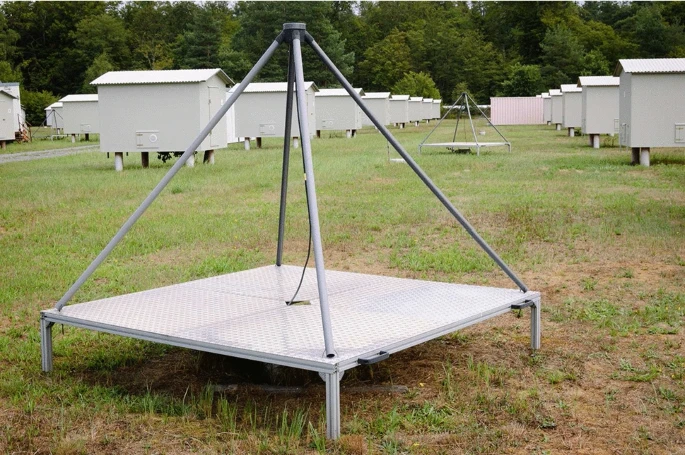
Measurement of radio emission in extensive air showers with the LOPES experiment.
Radio emision from air showers is detected with the dipole antenna array of the LOPES experiment. The properties of the air showers are measured simultaneously with the KASCADE-Grande experiment. LOPES (LOFAR prototype station) was a pioneering experiment to establish the radio detection of air shwoers. This layed the foundation for the radio detection of air showers with the LOFAR radio telescope and AERA at the Pierre Auger Observatory.
KASCADE-Grande
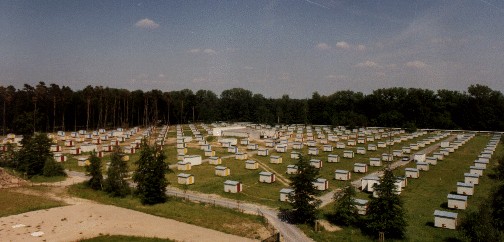
Indirect measurement of cosmic rays with the air shower experiment KASCADE-Grande.
Extensive air showers, induced by high-energy cosmic rays are investigated in the energy range from 1014 to 1017 eV with the experiment KASCADE-Grande. Detailed measurements of the hadronic air shower component are performed using the large hadron calorimeter. With KASCADE(-Grande) we measured energy spectra for groups of elements between 1011 and 1018 eV. Hörandel established clear evidence for a knee in the hadronic component of extensive air showers. He introduced methods to use air shower measurements to conduct quantitative tests of hadronic interaction models.
TRACER
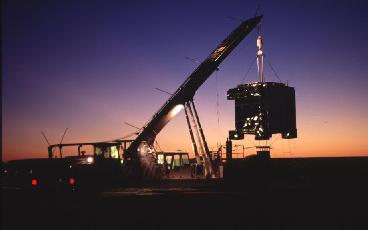
Direct measurement of cosmic-ray particles with the balloon experiment TRACER.
TRACER is a transition radiation detector, developed at the University of Chicago to measure individual element spectra of heavy cosmic-ray nuclei (boron to iron) in the energy range from 10 GeV to 100 TeV. We have measured the boron abundance in cosmic rays at the highest energies to date.